When most people think of equine physiotherapy, they think of injury recovery. But equine physiotherapy for performance is just as valuable — and often overlooked. Horses competing or working regularly accumulate tension, asymmetry, and stiffness that can quietly limit what they are able to offer. Working with riders and carers across Kent, Elena sees horses that feel subtly “off” to their riders long before any lameness is apparent. Physiotherapy can be the missing piece in helping them move and perform at their best.
Key Takeaway
You don't need to wait for an injury. Regular physiotherapy assessments every 6–8 weeks help catch hidden tension, asymmetry, and stiffness before they limit your horse's performance or cause injury.
Common Performance Limiters in Horses
Some of the most frequent issues assessed include:
Back tension and stiffness: A tight topline limits a horse’s ability to swing through their back, affecting paces, collection, and responsiveness to the rider’s aids.
Asymmetry: Many horses develop a preference for one rein or struggle to bend equally in both directions. This often reflects underlying muscular imbalance rather than a training problem alone.
Hindquarter weakness or stiffness: The hindquarters are the engine of performance. Reduced mobility here affects impulsion, engagement, and jumping effort.
Neck and shoulder tension: Often linked to how a horse is worked, tension in these areas can affect head carriage, contact quality, and overall suppleness.
Identifying these patterns early — before they become significant — is one of the most practical benefits of routine physiotherapy. Learn more about our equine physiotherapy services.
What an Assessment Includes
A performance-focused physiotherapy assessment begins with observation: watching the horse at rest and in movement, both in hand and under saddle where appropriate. Elena assesses symmetry, posture, muscle development, and how the horse moves through each gait.
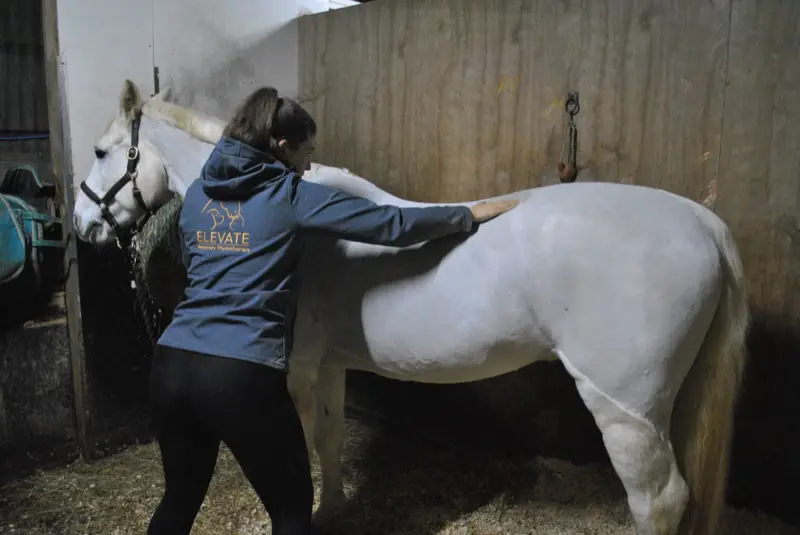
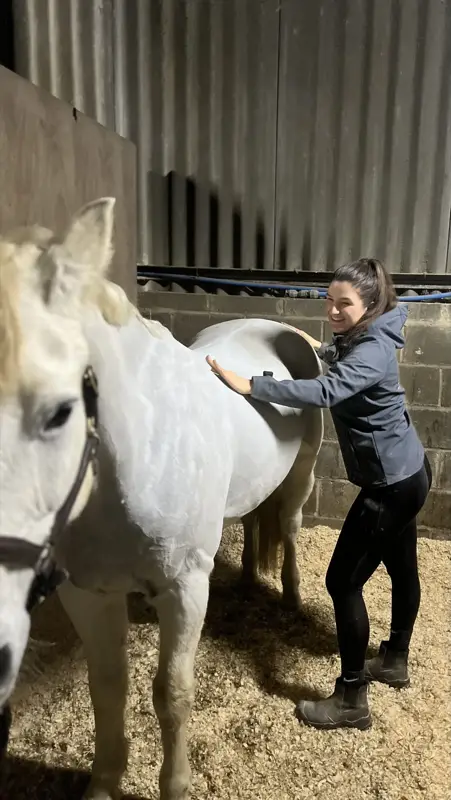
A hands-on assessment follows, evaluating muscle tone, joint range of motion, and areas of sensitivity or restriction. This gives a clear picture of where the horse is holding tension and which structures may be contributing to performance limitations.
Mobilisation and Soft Tissue Work
Depending on what the assessment finds, treatment typically includes:
- Soft tissue massage to release muscle tension and improve circulation
- Myofascial release techniques for deeper restrictions
- Passive joint mobilisation to restore range of motion
- Trigger point therapy for areas of localised tension
These techniques work together to reduce restriction, improve symmetry, and help the horse move more freely. Many riders notice a difference within a session or two — horses feel looser, more willing, and easier to work with in both directions.
Exercises to Complement Physiotherapy
Physiotherapy is most effective when supported by targeted exercises between sessions. Elena provides tailored exercise plans that may include carrot stretches, ground pole work, hill work, or specific ridden exercises to build strength and suppleness.
Exercises are always matched to the horse’s current level and what your yard setup allows. The aim is to consolidate the improvements made during sessions and help the horse maintain them over time.

When to Book
Consider booking a physiotherapy assessment if your horse:
- Has recently changed behaviour under saddle
- Is struggling more on one rein than the other
- Feels stiff or reluctant in certain movements
- Is in regular competition or training and has not had a physio check recently
- Has recently returned to work after a period of rest
Routine assessment — even without a specific concern — can help keep horses comfortable and performing consistently across the season. Contact Elevate if you want to discuss addressing both horse and rider as a partnership.
Based in Kent, Elena offers equine physiotherapy assessments for horses at all levels, from leisure riding to competition. Get in touch to book a visit and find out how we can support your horse’s performance.