There is nothing more frustrating than knowing your dog is “off” and being told, “They’re just getting old,” or “That’s just how they are.”
You notice they aren’t as enthusiastic about walks. You see the subtle shifts in how they stand and behave — the irritability, the lack of enthusiasm, the “selective” listening. But the X-rays are clear. You feel gaslit by the very results that were supposed to give you answers.
If that sounds familiar, I want to say this clearly: you aren’t imagining it. You’re seeing the pain before it becomes a medical diagnosis.
Key Takeaway
Scans show structure. Gait analysis shows function. Most pain lives in the gap between the two — in how a dog actually moves, not how their bones look in a still image.
The Stone in the Shoe
Imagine you have a tiny stone in your shoe. It’s not enough to make you fall over — you can still walk to the shops. But to avoid the discomfort, you shift your weight slightly. You walk on the side of your foot. At first it’s a minor annoyance.
Now imagine you never take the stone out. Over time, your opposite knee starts to ache. After a week, your lower back hurts because you’ve been walking compensated. The stone is still small — but the damage has spread.
This is how chronic pain works in dogs:
- The primary issue: A minor joint tweak or muscle pull — the “stone.”
- The compensation: Your dog shifts weight to “hide” the pain. Dogs are stoic and brave — they won’t limp unless they have to.
- The secondary problem: Over time, the muscles and joints over-working to compensate begin to break down. By the time a vet sees a clear problem on a scan, your dog may have been dealing with that “stone” for months or even years.
Why a Scan Isn’t the Full Picture
It’s natural to treat an X-ray as the final word on pain. But scans have significant limitations:
The still-photo problem. A scan is a snapshot of your dog lying still. It doesn’t show how they move, how they guard their weight, or how they struggle to push off their back legs.
Invisible wiring. X-rays are excellent for seeing “foundations” (bones), but they are blind to the “electrical wiring” — nerves, muscles, ligaments, and myofascial tissue.
The lag time. The inflammation often burns for a long time before it leaves a scar that an X-ray can detect. You can be in real pain long before any bony changes are visible.
Moving from Structure to Function
If a scan looks at the structure of the house, online gait analysis looks at how the house is functioning.
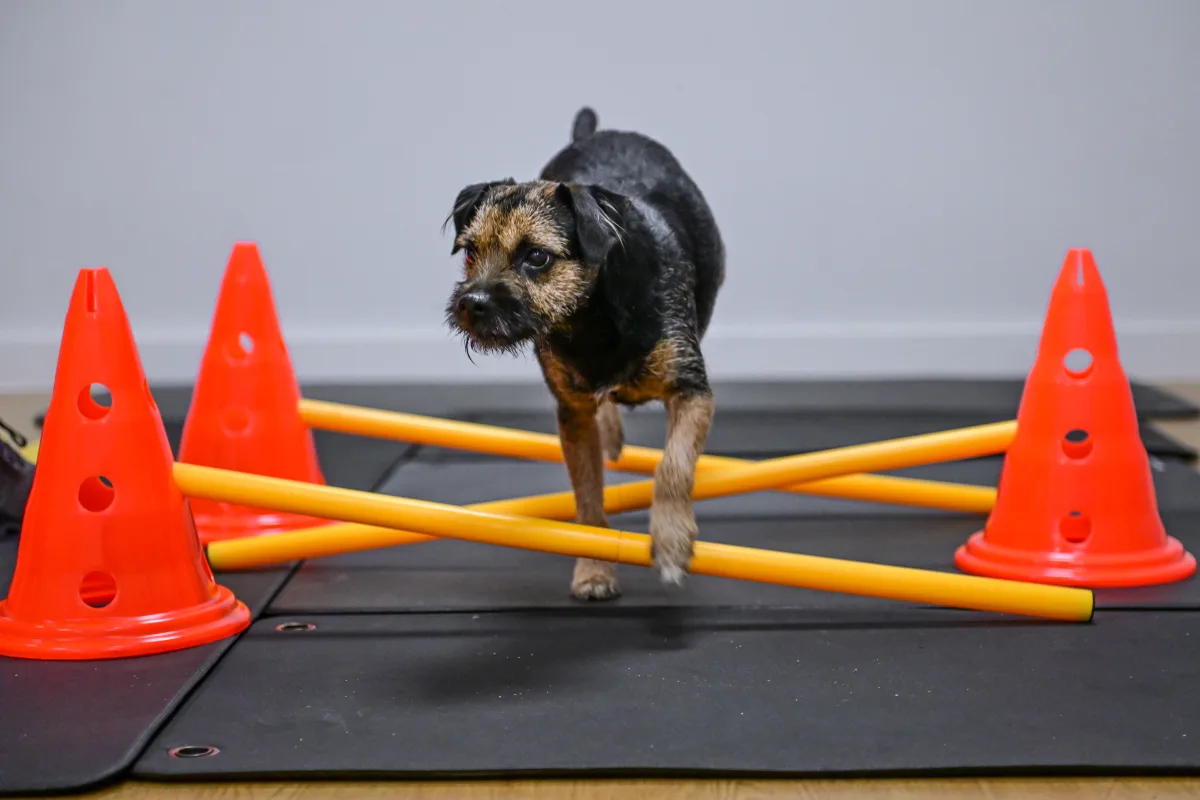
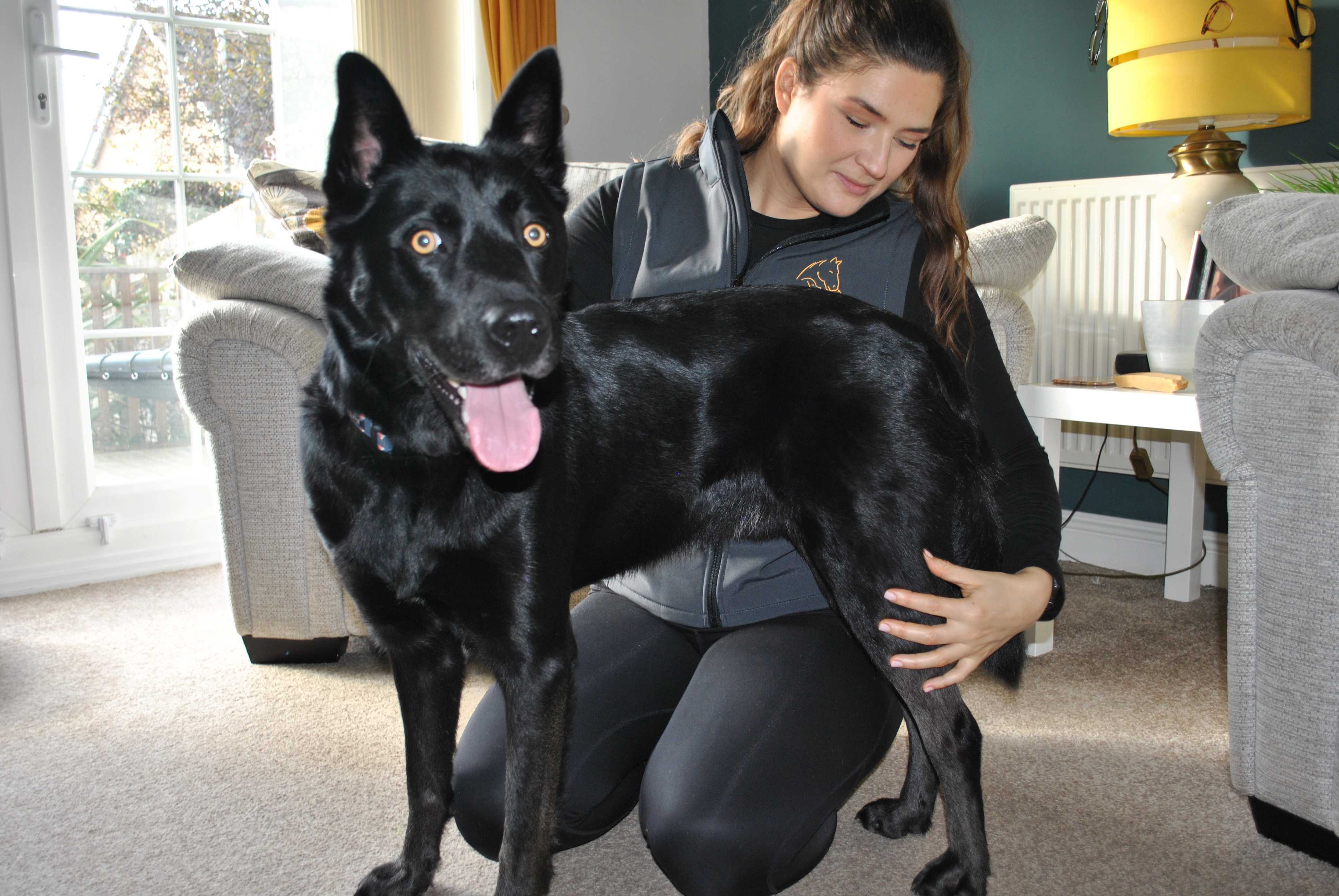
Instead of a still photo, Elevate uses high-detail video to look at your dog in motion. And because you record them at home, they don’t carry the “adrenaline mask” they wear in a clinic environment. We can see the evidence that scans miss: the shortened stride, the subtle hip dip, the way they shift weight while standing still.
This is the movement evidence you’ve been looking for.
What Happens Next
Once we’ve identified where the problem is coming from, online physiotherapy gives you the tools to address it directly from home.
You don’t need specialist equipment or clinic visits. Elevate guides you through targeted exercises, movement techniques, and practical adjustments — the same evidence-based approach used in clinic, delivered to your living room.
Your dog isn’t “just getting old.” They might just be waiting for someone to find the stone in their shoe.
Book an online gait analysis and get the answers you’ve been looking for.
References
Engel, G. L. (1977). The need for a new medical model: a challenge for biomedicine. Science, 196(4286), 129–136.
Gatchel, R. J., et al. (2007). The biopsychosocial approach to chronic pain. Psychological Bulletin, 133(4), 581–624.
Gonçalves, L., et al. (2008). Neuropathic pain is associated with depressive behaviour and neuroplasticity in the amygdala of the rat. Experimental Neurology, 213(1), 48–56.
Jaffal, S. M. (2025). Neuroplasticity in chronic pain: insights into diagnosis and treatment. The Korean Journal of Pain, 38(2), 89–102.
Latremolière, A., & Woolf, C. J. (2009). Central sensitization: a generator of pain hypersensitivity by central neural plasticity. The Journal of Pain, 10(9), 895–926.
Mills, D. S., et al. (2020). Pain and problem behavior in cats and dogs. Animals, 10(2), 318.
Scholz, J. (2014). Mechanisms of chronic pain. Molecular Pain, 10(Suppl 1), O15.