You’ve done the work. You’ve hired the trainers, bought the specialist harnesses, watched the tutorials, and spent countless hours trying to help your dog. But despite your dedication and your dog’s intelligence, you’ve hit a wall.
Maybe your dog has stopped progressing. Maybe they’ve suddenly started “forgetting” their training or reacting more intensely than before. When this happens, it’s easy to feel exhausted, frustrated, and guilty.
But here is the truth: you can’t train away a physical problem.
Key Takeaway
If a dog is in pain, their brain is in survival mode. They aren't choosing to ignore you — they literally cannot hear you over the noise of their own discomfort. Fixing the physical cause is what allows the training to finally work.
The Overflowing Kitchen Sink
Think of your dog’s ability to cope with the world like a kitchen sink. Every day, “water” goes in — a loud bin lorry, a dog barking behind a fence, a busy walk. A healthy, comfortable dog has a clear drain. They process that stress and move on.
But chronic pain is like a plug stuck in the bottom of that sink. Even before your dog wakes up, the sink is already half full because they are uncomfortable. By the time they step outside, there’s nowhere for the stress to go. One small trigger — a car driving past — and the sink overflows.
This is the stress-pain loop. When a dog is in pain, their body is flooded with cortisol and stress hormones. In this state, their brain is in “survival mode.” They aren’t choosing to ignore you — they literally cannot process your instruction over the noise of their own discomfort.
Why the Vet Clinic Often Misses the Signs
It’s heartbreaking for owners to hear “he looks fine” from their vet when they know something isn’t right. Dogs are masters at masking pain — especially in high-stress environments like a vet practice. The adrenaline of being there acts as a temporary painkiller.
Your dog might move perfectly in clinic because they are too anxious to show they are hurting. By the time the vet sees them, the mask is firmly on.
This is why online gait analysis is so effective:
- Comfort of home. Elevate sees your dog in their natural environment, where they aren’t masked by clinic adrenaline.
- The real picture. You send videos of your dog being themselves. Elena then analyses their movement frame-by-frame to find the tiny compensations and pain drivers missed in a 10-minute clinic assessment.
- Stress-free for everyone. No stressful car journeys, no reactive episodes in the waiting room.
The Missing Piece: Your Recovery Team
Think of your dog like a professional athlete. An athlete has a coach to help them perform — but they also have a physiotherapist to make sure their body is physically capable of doing the work. If your dog’s body has a physical problem, the coach’s instructions won’t matter.
By identifying the pain, we finally give the coaching a chance to succeed.
What Happens After We Find the Cause
Once we’ve identified the physical source of your dog’s discomfort through gait analysis, online physiotherapy gives you a structured path forward.
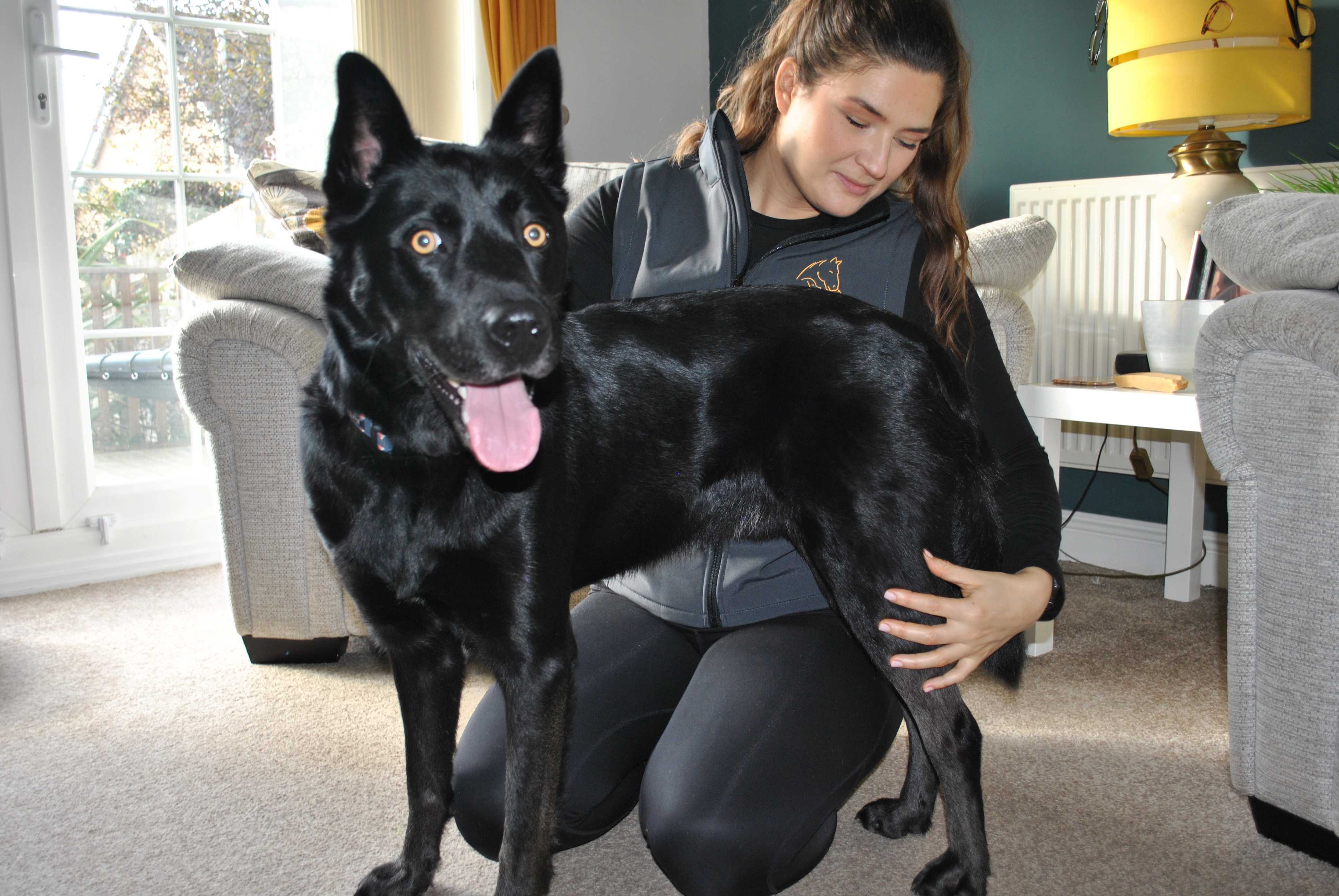
You are the healer — Elevate guides you through specialist exercises and techniques you perform at home. For a nervous or reactive dog, having you do the therapy (guided by a specialist) is far more effective than a stranger handling them in a clinic. And you gain long-term tools, not a quick fix: the skills to manage your dog’s wellbeing for years to come.
Stop hitting the wall and start finding the answers. Book your online gait analysis and let’s find out what your dog has been trying to tell you.
References
Engel, G. L. (1977). The need for a new medical model: a challenge for biomedicine. Science, 196(4286), 129–136.
Gatchel, R. J., et al. (2007). The biopsychosocial approach to chronic pain. Psychological Bulletin, 133(4), 581–624.
Gonçalves, L., et al. (2008). Neuropathic pain is associated with depressive behaviour and neuroplasticity in the amygdala of the rat. Experimental Neurology, 213(1), 48–56.
Jaffal, S. M. (2025). Neuroplasticity in chronic pain: insights into diagnosis and treatment. The Korean Journal of Pain, 38(2), 89–102.
Latremolière, A., & Woolf, C. J. (2009). Central sensitization: a generator of pain hypersensitivity by central neural plasticity. The Journal of Pain, 10(9), 895–926.
Mao, C. P., et al. (2021). Altered amygdala-prefrontal connectivity in chronic nonspecific low back pain. Neuroscience, 482(1), 18–29.
Mills, D. S., et al. (2020). Pain and problem behavior in cats and dogs. Animals, 10(2), 318.